
Use Case
The Image Is a Promise the Toy Has to Keep
A toy company once generated AI catalog images that looked better than the product. The review came back: two stars — 'item not as pictured.' That story is why our entire system starts with accuracy.
The Challenge.
Toys are where AI image embellishment does its most direct damage. Generation naturally 'improves' products — richer colors, finer stitching, better proportions — and a parent unboxing a toy that's visibly worse than the listing photo doesn't write it off as creative license. They write a one-star review and request a refund. The image promised something the physical product didn't deliver.
Scale matters double here: 'smaller than expected' stings hardest when the recipient is a disappointed child. And the category's buyers — parents — are the most trust-sensitive audience in e-commerce; anything that pattern-matches to 'scammy listing' kills the purchase.
At the same time, toys genuinely need playful, contextual imagery — kids' rooms, play scenes, gift moments — at seasonal volume, with Q4 making or breaking the year. Traditional shoots with child models are expensive, regulated, and slow.
How Dezygn Solves This.
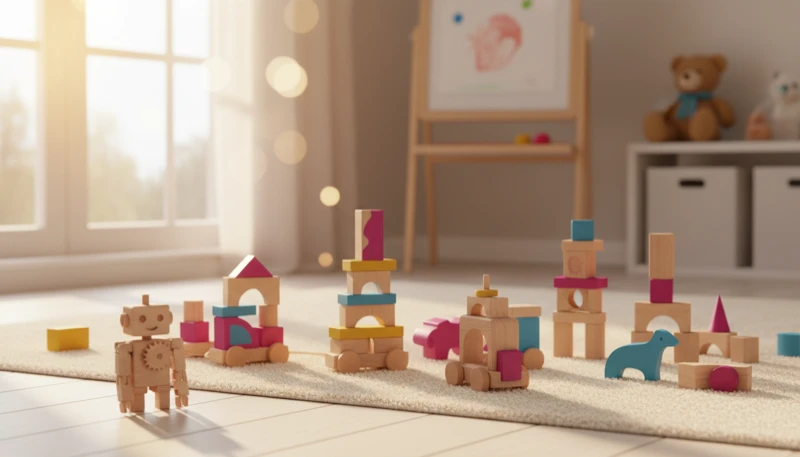
Dezygn's accuracy discipline exists because of this category. Every toy is anchored by its real product photo — the AI recreates your product instead of idealizing it — with materials and dimensions stated explicitly so plush stays plush-textured and a 20cm toy looks 20cm. The conversion-integrity test applies to every frame: accurate, realistic, on-brand. 'Close enough' isn't a style choice; close enough is a refund. Around that honest core, the playful layer is engineered: bright, joyful scene presets (colorful backdrops, playroom settings, gift moments), scale shots with hands as universal references, and packaging shots with the 2K text rule keeping box art legible. For lifestyle context, traces of play — a child's hand reaching in, a bedroom floor scene — read warm without requiring child-model logistics for every image.
Anti-Embellishment by Design
Real source anchoring keeps colors, textures and proportions true to the product that ships — the 'item not as pictured' review, prevented at the source.
Scale a Parent Can Trust
Hands-as-ruler scale shots and stated dimensions answer 'how big is it' before checkout, not after unboxing.
Play Scenes Without the Shoot
Playrooms, gift moments, bedtime scenes — generated as reusable environments in your brand's palette, ready for every seasonal push.
Box Art That Stays Legible
The 2K source rule keeps packaging type and character art crisp — critical for a category where the box is half the gift.
Q4 Volume, January Calm
Holiday campaign imagery produced in batches in hours — gift guides, bundles, seasonal scenes — without betting December on an October shoot.
3
Tests every image must pass: accurate, realistic, on-brand
100%
Of toy generations anchored to real product photos
2K+
Source resolution so packaging art survives
Related Use Cases.
Pet Products
Pet imagery converts on emotion — the retriever with the plush toy, the cat in the new bed. Getting a consistent, photogenic animal together with your accurate product used to be the hardest shoot in e-commerce. Now it's a composite.
Home Decor
Nobody buys a vase — they buy how the shelf looks with the vase on it. Home decor is sold by rooms, and rooms are exactly what AI scene-building does best.
Baby Products
Parents buying for a baby scrutinize everything. The imagery has to feel safe, soft and true — and the product that arrives has to match it exactly.